/**
 * Registers information about a particular instance for an
 * {@link com.netflix.discovery.shared.Application}.
 *
 * @param info
 *            {@link InstanceInfo} information of the instance. 实例信息
 * @param isReplication
 *            a header parameter containing information whether this is
 *            replicated from other nodes. 一个 HTTP 头参数,指定是否从其他节点复制服务信息
 */
@POST
@Consumes({"application/json", "application/xml"})
public Response addInstance(InstanceInfo info,
                            @HeaderParam(PeerEurekaNode.HEADER_REPLICATION) String isReplication) {
    logger.debug("Registering instance {} (replication={})", info.getId(), isReplication);
    // validate that the instanceinfo contains all the necessary required fields
    // 验证 instanceinfo 是否包含所有必需的必需字段
    //...

    // handle cases where clients may be registering with bad DataCenterInfo with missing data
    // 处理客户端可能向缺少数据的错误 DataCenterInfo 注册的情况
    DataCenterInfo dataCenterInfo = info.getDataCenterInfo();
    if (dataCenterInfo instanceof UniqueIdentifier) {
        String dataCenterInfoId = ((UniqueIdentifier) dataCenterInfo).getId();
        //...
    }

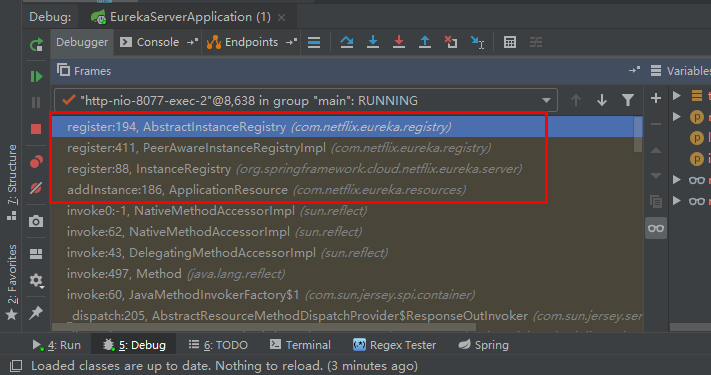
    // 将注册业务交给 register() 方法处理
    registry.register(info, "true".equals(isReplication));
    return Response.status(204).build();  // 204 to be backwards compatible
}
/**
 * Registers the information about the {@link InstanceInfo} and replicates
 * this information to all peer eureka nodes. If this is replication event
 * from other replica nodes then it is not replicated.
 *
 * @param info
 *            the {@link InstanceInfo} to be registered and replicated.
 * @param isReplication
 *            true if this is a replication event from other replica nodes,
 *            false otherwise.
 */
@Override
public void register(final InstanceInfo info, final boolean isReplication) {
    int leaseDuration = Lease.DEFAULT_DURATION_IN_SECS;
    if (info.getLeaseInfo() != null && info.getLeaseInfo().getDurationInSecs() > 0) {
        leaseDuration = info.getLeaseInfo().getDurationInSecs();
    }
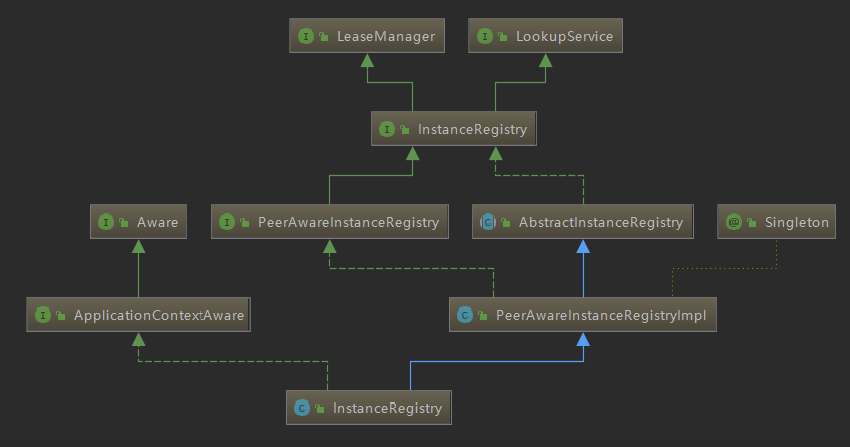
    // 调用父类 AbstractInstanceRegistry 注册服务
    super.register(info, leaseDuration, isReplication);
    // 广播消息,同步注册消息到其他节点
    replicateToPeers(Action.Register, info.getAppName(), info.getId(), info, null, isReplication);
}
/**
 * Replicates all eureka actions to peer eureka nodes except for replication
 * traffic to this node.
 */
private void replicateToPeers(Action action, String appName, String id,
                                InstanceInfo info /* optional */,
                                InstanceStatus newStatus /* optional */, boolean isReplication) {
    Stopwatch tracer = action.getTimer().start();
    try {
        if (isReplication) {
            numberOfReplicationsLastMin.increment();
        }
        // If it is a replication already, do not replicate again as this will create a poison replication
        if (peerEurekaNodes == Collections.EMPTY_LIST || isReplication) {
            return;
        }

        for (final PeerEurekaNode node : peerEurekaNodes.getPeerEurekaNodes()) {
            // If the url represents this host, do not replicate to yourself.
            // 排除当前主机
            if (peerEurekaNodes.isThisMyUrl(node.getServiceUrl())) {
                continue;
            }
            // 复制信息到对于的节点
            replicateInstanceActionsToPeers(action, appName, id, info, newStatus, node);
        }
    } finally {
        tracer.stop();
    }
}
AbstractInstanceRegistry
该类用于处理来自 Eureka 客户端的所有注册表请求。register() 方法源码如下:
/**
 * Registers a new instance with a given duration.
 *
 * @see com.netflix.eureka.lease.LeaseManager#register(java.lang.Object, int, boolean)
 */
public void register(InstanceInfo registrant, int leaseDuration, boolean isReplication) {
    // private final ReentrantReadWriteLock readWriteLock = new ReentrantReadWriteLock();
    // private final Lock read = readWriteLock.readLock();
    // 只读锁
    read.lock();
    try {
        // 所有的服务信息都添加到 registry 这个 map 中,
        // 格式为:ConcurrentHashMap<String, Map<String, Lease<InstanceInfo>>>()
        Map<String, Lease<InstanceInfo>> gMap = registry.get(registrant.getAppName());
        REGISTER.increment(isReplication);
        // 如果没有该服务的信息,则新建,并添加到registry中
        if (gMap == null) {
            final ConcurrentHashMap<String, Lease<InstanceInfo>> gNewMap = new ConcurrentHashMap<String, Lease<InstanceInfo>>();
            gMap = registry.putIfAbsent(registrant.getAppName(), gNewMap);
            if (gMap == null) {
                gMap = gNewMap;
            }
        }

        // existingLease 信息即服务的一些注册时间等信息,主要是为了校验该服务是否过期,如果已过期,则剔除
        Lease<InstanceInfo> existingLease = gMap.get(registrant.getId());
        // Retain the last dirty timestamp without overwriting it, if there is already a lease
        if (existingLease != null && (existingLease.getHolder() != null)) {
            Long existingLastDirtyTimestamp = existingLease.getHolder().getLastDirtyTimestamp();
            Long registrationLastDirtyTimestamp = registrant.getLastDirtyTimestamp();
            logger.debug("Existing lease found (existing={}, provided={}", existingLastDirtyTimestamp, registrationLastDirtyTimestamp);

            // this is a > instead of a >= because if the timestamps are equal, we still take the remote transmitted
            // InstanceInfo instead of the server local copy.
            if (existingLastDirtyTimestamp > registrationLastDirtyTimestamp) {
                logger.warn("There is an existing lease and the existing lease's dirty timestamp {} is greater" +
                        " than the one that is being registered {}", existingLastDirtyTimestamp, registrationLastDirtyTimestamp);
                logger.warn("Using the existing instanceInfo instead of the new instanceInfo as the registrant");
                registrant = existingLease.getHolder();
            }
        } else {
            // The lease does not exist and hence it is a new registration
            synchronized (lock) {
                if (this.expectedNumberOfClientsSendingRenews > 0) {
                    // Since the client wants to register it, increase the number of clients sending renews
                    this.expectedNumberOfClientsSendingRenews = this.expectedNumberOfClientsSendingRenews + 1;
                    updateRenewsPerMinThreshold();
                }
            }
            logger.debug("No previous lease information found; it is new registration");
        }
        Lease<InstanceInfo> lease = new Lease<InstanceInfo>(registrant, leaseDuration);
        if (existingLease != null) {
            lease.setServiceUpTimestamp(existingLease.getServiceUpTimestamp());
        }
        gMap.put(registrant.getId(), lease);
        recentRegisteredQueue.add(new Pair<Long, String>(
                System.currentTimeMillis(),
                registrant.getAppName() + "(" + registrant.getId() + ")"));
        // This is where the initial state transfer of overridden status happens
        if (!InstanceStatus.UNKNOWN.equals(registrant.getOverriddenStatus())) {
            logger.debug("Found overridden status {} for instance {}. Checking to see if needs to be add to the "
                            + "overrides", registrant.getOverriddenStatus(), registrant.getId());
            if (!overriddenInstanceStatusMap.containsKey(registrant.getId())) {
                logger.info("Not found overridden id {} and hence adding it", registrant.getId());
                overriddenInstanceStatusMap.put(registrant.getId(), registrant.getOverriddenStatus());
            }
        }
        InstanceStatus overriddenStatusFromMap = overriddenInstanceStatusMap.get(registrant.getId());
        if (overriddenStatusFromMap != null) {
            logger.info("Storing overridden status {} from map", overriddenStatusFromMap);
            registrant.setOverriddenStatus(overriddenStatusFromMap);
        }

        // Set the status based on the overridden status rules
        InstanceStatus overriddenInstanceStatus = getOverriddenInstanceStatus(registrant, existingLease, isReplication);
        registrant.setStatusWithoutDirty(overriddenInstanceStatus);

        // If the lease is registered with UP status, set lease service up timestamp
        if (InstanceStatus.UP.equals(registrant.getStatus())) {
            lease.serviceUp();
        }
        registrant.setActionType(ActionType.ADDED);
        recentlyChangedQueue.add(new RecentlyChangedItem(lease));
        registrant.setLastUpdatedTimestamp();
        invalidateCache(registrant.getAppName(), registrant.getVIPAddress(), registrant.getSecureVipAddress());
        logger.info("Registered instance {}/{} with status {} (replication={})",
                registrant.getAppName(), registrant.getId(), registrant.getStatus(), isReplication);
    } finally {
        read.unlock();
    }
}







 川公网安备51010802032098